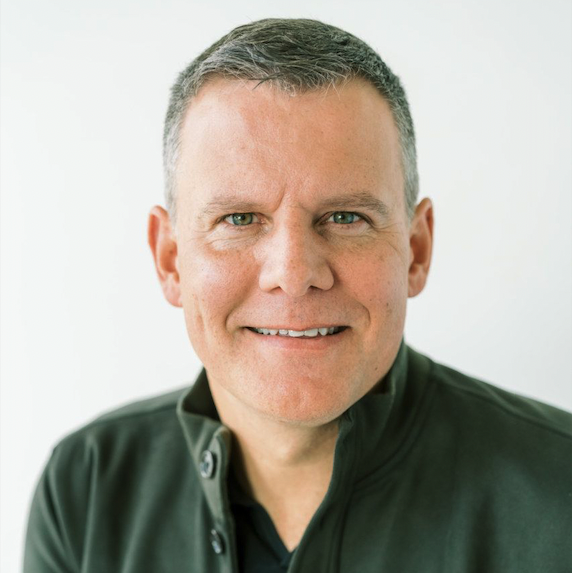
[00:00:00] Steven: Hey dads, quick question. What if the biggest threat to your kids future isn't the world out there and all that dirty stuff happening out in the world, but it's the legacy that you leave behind, specifically the money that you live behind.
Most families blow up over inheritance and asset transfer. Today we're going to meet an Australian family that didn't stick around for their very interesting and insightful story.
Run your home and your dough like a biblical boss. Hey everybody, welcome back to the Abraham's Wallet podcast where we think multi generationally about money and culture and work and family and community. I'm your host, Steven Manuel, and today we're talking about one of the most important and I daresay the most avoided jobs a father has and that is transferring his wealth and familial peace along with it.
We have great guests today that are going to be, we're going to be talking to. It's a family called the Ballingers from Narrangal, Victoria, Australia.
Pretty exotic. I think. They have successfully passed the lion's share of their family's assets, the family farm, to their son Hayden, who we're going to be talking to, while keeping genuine love and unity among all the siblings.
They didn't do it by winging it or pretending that everyone gets the same slice or singing Kumbaya around a campfire. What they did was they brought in professionals, lawyers and trust experts on purpose, not because there was some family drama, but, but to prevent family drama. Our good friend Justin Wolfenberg met these people on a recent trip to Australia, came back and told me about them. And we just thought it would be a terrific case study in asset management over multiple generations because of the way it was handled in their family.
I think this is gold for every dad who intends to grow the family fortune and also wants to pass it off in a way that the kids, kids are still speaking to each other at Christmas time. So before we go into this conversation with the Ballingers, I want to ground this story in scripture.
From the very beginning, God has cared about land and legacy. I remember years ago we did a conversation with Justin and, and he talked about the two things that God seems to care about for families is children and land.
And he wants those things to happen.
Growing over the generations and happening generation over generation.
In the Old Testament, the promised land wasn't just real estate and it wasn't. They didn't think of it as a future nation. They thought of it as covenant inheritance for the family of Abraham. They didn't think, oh, the Israelite Nation. We're all going to be called Jews someday. No, they thought, this is our family and this is our family's inheritance. And God, through his covenant with Abraham, has promised this land. As part of the covenantal inheritance, fathers were commanded to faithfully pass that inheritance on to their sons so that the family line could remain in the place of God's blessing and and fulfill their calling across generations. It's the exact topic that we talk about over and over here at Abraham's Wallet is can you describe your family vision? Do you know why you're growing assets? Do you know why you're growing your capital?
And do you know how to hand those things off? Train your children in a way that they can receive those. Abraham to Isaac went smoothly enough, but Isaac to Jacob saw massive family drama.
What about the story of the prodigal son? There was an inheritance involved there, as I recall, and it goes really badly.
Proverbs 13:22 kind of sums up the biblical standard. And that verse is hanging in my living room on our.
We have a wall of ancestors in our living room and right in the middle of that is this verse, Proverbs 13:22. It says, A righteous man leaves an inheritance to his children's children.
Just think about that for a second. A righteous man, that's what you aspire to be, leaves an inheritance not just to his kids, that they can squander and destroy and soak it in on themselves and take an around the world trip for a year and blow it all.
No, he leaves an inheritance for his children's children. That says a couple of things. It talks about training. I think it's packed into that one Bible verse.
Training your children so that they grow the fortune as opposed to squandering, also speaks of stewarding in a way that multiplies. That's clearly one of the lessons that God wants his sons to learn.
He leaves an inheritance for his children's children. And I don't think this is about building an ego driven dynasty. It's about stewarding so that future generations can glorify God. They have more opportunities to give and to be generous. They provide for their households and advance the kingdom without starting from zero every time. I just don't think that was God's plan. Multigenerational wealth, when handled faithfully, becomes a platform for faithfulness. And, and it expands out if you have a couple of kids and you're faithful and you become the patriarch and you become the standard bearer for here's how our generations are going to work in very Short time. We're talking about hundreds and hundreds of people on your doubt line. So that's what we're trying to steward is a faithful family vision that includes how do we hand off the wealth to the next generation.
That doesn't create dramas. The tension, as I said, is that many times the Bible shows how easily blessing can turn into curses when asset transfer fails. Think of all the fights over birthright that are in the Bible stories. Think about the divided kingdom of Solomon with his sons.
Wealth transfer without wisdom is often disastrous.
There are many horror stories about this. They come up all the time in the news.
Studies of wealthy families show that 70% of fortunes are gone by the second generation. And here's the really shocker. 90% of family fortunes are gone by the third generation.
That is children's children.
So clearly, the way that we train our children for wealth and the way that we steward wealth transfer matters so much.
And some of the horrors that happen are siblings suing siblings over contested inheritances, marriages that get strained or destroyed by sudden windfalls that they weren't prepared for and they weren't trained against.
What would happen to your family if you inherited $2 million overnight?
It breaks a lot of people. There's documentaries of people who win the lottery, and it doesn't turn into blessing for them. They weren't trained to handle wealth. They don't know how to handle wealth. They don't know how to say no to themselves and to those around them. And it's destruction. And it's shocking because we have these fantasies about, oh, if we could get millions of dollars, oh, everything would be great.
And if you're not prepared for it, no, it doesn't end up great. Families have been torn apart by vague or handwritten wills that left everything open to interpretation, triggering years of court battles and permanent silence between siblings.
Farms that once stayed whole have been carved into pieces that are so small because we've got to take care of the nephew who has a claim to the inheritance and the grandson.
And they. They carve up the family business or the family farm into slices that are so small they can't sustain anybody and they become useless. And now they're all sold off and everything's gone.
I just want you as a future patriarch, as our. As our teacher said, we have a T shirt, an Abe's wallet T shirt that says future ancestor on the front. I want you to think of yourself in those terms. I'm a future ancestor. Someday, when you're the old guy and, and your picture is hanging on the wall. I want you to be thinking, I have built a family where the relationships that happen across generations, nephews, aunts, uncles, cousins, all of these are stable and strong.
So one of the things that we know destroys them is a lack of clarity and a lack of strategy for how asset transfer is going to happen over generations.
I don't want your family destroyed over those things.
So, I mean, there's. I could go on. Court orders and estrangement and even divorces all get triggered by inheritance, done poorly. This is not God's design. We can do better. Which brings us to the Ballingers today. So we're going to be talking to the Ballingers and Justin is interviewing them. He's going to be sitting at this desk. You won't see me. If you're watching on video, I'm right off camera making sure everything goes as well as it can technically.
And the Ballingers, by the way, they are in a farmhouse in Australia.
They're not like talking into a pro level podcast microphone. So we'll just take them as they are. Justin is very interested in their story, so he's just going to be plying them with questions and I'll just throw it over to their conversation, which is already in process, and I'll come back at the end with some conclusions. Here they are, Justin Wolfenberg talking to the Ballingers.
[00:10:37] Justin: I'm super excited to chat with you guys. As we met in Australia doing the storyform life, and during some of the breaks, I got to hear little snippets of your family story.
And I was struck by things that I had never thought of that confronted me and made me think of things very differently. And it was really the story of how you guys, how your dad passed the farm down to you with, I think you had six or seven siblings. You can tell us more about that. And that story just stirred something in me where I was like, ah, I want to learn more about this. And so when I heard your story, I was like, this would be a great story for us to hear.
We don't hear a lot of success stories and you guys did some things that I wouldn't have thought of. And so I'd love for you guys to kind of introduce yourselves a little bit, tell us who's in your family and what you do for a living, and then we can kind of get into to your story.
[00:11:32] Hayden: So my name's Hayden, my wife cherie. We have six of our own children ranging from five through to 17 now. And we live in a rural part of Victoria, Australia called Noringle. And we run a dairy farm. So we're running about 600 head of cattle, which is not huge in the worm scheme. Um, but it's a family owned and ran business and yeah, it's a real privilege to be part of that.
[00:12:02] Justin: And so what's a day look like? Just give me a real short snippet. Like what's a day look like for you? You guys wake up at like 10am or do you get up before dark? Or what's your day look like?
[00:12:11] Hayden: Well, this morning I was up at 4:30.
We actually had a cold spell come through last night. We heard hail on the roof before getting up. So it's those mornings that you wonder why we do what we do, but got out there and yeah, so it's involved milking the cows this morning, feeding up and we've also got calves on the ground that, that we need to feed and look after as well.
[00:12:35] Justin: And tell us a little bit, how are your kids involved? Like how do you guys do that together as a family?
[00:12:41] Cherie: Yeah, I think it's something that Hayden, growing up on the farm himself was always really conscious that he wanted to farm in such a way that our children had the opportunity to be involved if they wanted to. So our house is very close to, to the dairy and obviously there's some downsides to that with the smells. But the plus side is that it's very much, so much interwoven into our family life. So the kids go out in the morning.
We've been big on teaching them the value of, I guess, contributing and work and so they, they've learned to work. Our oldest son will still remind us of the times we used to pay him $1 to wash the dairy yard after milking each day. Day might have been ripping him off a little bit, but yeah, so they start small but like washing the yard. But now, yeah, particularly our older teenagers, they all regularly milk in the dairy. They, our son feeds out using the tractor and does a lot of the tractor machinery work. I think farms have a really unique opportunity to build responsibility in kids from a young age. And that's something we definitely prioritise throughout.
[00:13:51] Hayden: And look, there's no doubt that the day and age that we're living in, unfortunately regulation and safety restrictions are making that increasingly difficult, which is unfortunate because I think part of teaching kids, whether it's around safety or responsibility, is actually giving them those opportunities in a safe environment.
So look, I'm really grateful for that opportunity that I had to grow up in a Dairy situation on a farm. And, yeah, really glad that we've had that opportunity for our kids to be involved as well.
[00:14:28] Justin: That's really cool. So, Hayden, tell me about your childhood. You grew up on the farm and then what made you. Did you leave and then come back or what was your story? How did you get connected to this and wanting to stay into the farm?
[00:14:40] Hayden: Yeah, yeah, good question. I was always interested in the farm growing up. I spent a lot of time out with my father from a young age, whether that was driving tractors, helping on the farm in, in various different ways. And I was always encouraged once I finished my high school to go off and, yeah, pursue from, from. In my case, it was university or just to pursue something else and get some life experience. And so I actually went off to university, did an ag science degree.
I traveled and spent a year over in Africa. Halfway through that time, I also then worked for the Department of Agriculture for three years before then coming back home. So that stage, I was working for the Department of Ag and working alongside different farms and seeing, you know, the business structures behind a lot of different farms.
And then pretty much approached Dad. I was the one that kind of initiated and came up with a bit of a plan of would he entertain the idea if I knew at that stage the farm is relatively small and my father was still supporting my younger siblings through both school and university. So I knew they had a lot of financial needs there as well, but just approached them about the opportunity to lease a farm next door to purchase our own cows and come into partnership with Mum and Dad and expand what they were doing. And, yeah, so it came with a bit of a game plan. They were really encouraged by that. I think it was, you know, Dan certainly came alive with the idea of, you know, being able to work with myself. I had picked up some skills and ideas from the work that I'd done, plus obviously growing up on the farm and with Dad's knowledge. And so we put that together and expanded the farm and that was the first step in that process. And we thought initially, we'll just give it three or four years and see how everyone's going without impacting Mum and Dad's farm too much. And then within three years, I think we were already discussing the opportunity of, yeah, buying into the family farm business and then, yeah, expanding it from there.
[00:17:02] Justin: And so you're there, you're partnering together, you've kind of. Kind of your own thing going, you're leasing some land.
And then it was like, okay, so what's the next step? So you guys are saying, well, we would want to do more of this or take all of this over. Right. How did you guys approach that step?
[00:17:18] Hayden: Yeah, so it was really interesting.
[00:17:19] Justin: You had other siblings involved too, right?
[00:17:21] Hayden: Yeah, yeah. No, correct. So I think at that stage we did had a taste for the three years, and I had the opportunity to work outside of the farm and then back on the farm, had a real desire there. Not only did I really enjoy farming, the variability and just the problem solving that that created, but also just the opportunity to live in community. Like, you know, we have my parents living 500 meters down the road, my great grandparents, or my grandparents, sorry, living.
Yeah, the other direction, 400 meters.
Such a unique opportunity to live with family. And at that stage, we'd had our first son and, you know, then had more kids. So then they had the opportunity to also grow up with their parents, grandparents and great grandparents, which is pretty unique. So all these things come together where we thought and I suppose the opportunity to forge our own future and be flexible with our time and all those things really stood out about farming. And so we then made the decision about three years in that, yeah, we were gonna make this more or investigate making this more permanent. So I approached Dan about the idea of how could this work? What might it look like?
We were the ones at that stage that said I had some contacts of consultants that have worked in this business that were very good at sitting down. And so that's really when we got an ag consultant involved. He sat down with both Mum and Dad individually and then sat down with Sheree and I individually and just talked through what our desires were, what our needs were to try and formulate whether this is possible, and to come up with a bit of a plan of what that might look like.
[00:19:27] Cherie: I think that was something that we just wanted to reiterate in this conversation that we know succession will look different for every business.
And so Hayden hears all sorts of farming succession stories that often don't go too well.
But, yeah, one thing that's been really clear to us and even those initial conversations with the consultant, what he was trying to ascertain was, is every person around this table keen to make it work? Do we all have a heart for working towards the same goal of not just passing down a farm, but I guess what the vision for the farm was initially as well, of just using that? We've always seen it and we can see that in the generations before it says a gift from God to be able to steward, to bless others with. So, yeah, we Those initial conversations were to kind of sit down and go, are we on the same page? Do we all have a heart to make this one a work? Are we willing to give and take in that space to actually make it happen? And yeah, we've always been really grateful for Hayden's parents. They could see the big picture and they really wanted to be able to make this an option for us to be able to take over the farm
[00:20:37] Hayden: because unfortunately, we hear so many sad stories of, you know, intergenerational succession going, going poorly.
[00:20:46] Cherie: So the expert advice that we got was really valuable. So he was able to sit down.
He was an expert in succession planning. So he had done this multiple times before.
And he put on paper, I guess, the things that were in our head and in our heart and actually came up with a plan which had some really clear objectives and benefits and outcomes for all of us. And that was, was really important for us to then be able to go and take to, individually to. We went to our lawyer and our accountant and Hayden's parents did the same.
But also to have that documented as well for Hayden's siblings to be able to know that, that, that a process had been discussed with some independent advice as to the best pathway forward.
[00:21:32] Hayden: Yeah. And so I think the important thing is to have a lot of clarity around that and that's what that process helped us to achieve.
Yeah, we were slightly different and once again, every, every family does it different, but because I am part of a large family, go through more of a business transaction type of thing where land was valued and assets were, There was a value put on them. But in exchange to make it work, we were also put on a, on a share farm arrangement at that point where although we didn't have as many assets, we were taking on more of the risk. And so there was a, I suppose an opportunity there in our farming business
[00:22:19] Steven: setup
[00:22:21] Hayden: to then build equity to be able to, I suppose, purchase the farm. And what made it possible was that Mum and Dad were flexible in being able to sell the farm in, in small incremental amounts. I suppose that we weren't just coming in to buy the entire farm, which would have been completely out of reach. But for example, the first step, you know, was built purchasing the operating component so the cows and the machinery. And then, you know, once we got our foot in the door there, then we could, we could purchase, you know, the first parcel of land. And once we got credit with the banks, then there was more flexibility to then. And so it was this incremental, step by step, Approach as opposed to trying to go in, which would have been unachievable.
[00:23:10] Cherie: Yeah. So very much was a process, wasn't it? Over many, many years. So even the.
Even looking back at our records in preparation for this, we sat down with that same farm consultant. Not just once. I think we revisited the conversation and the plan every five years for a good 15 years there, just to keep getting updates that were on the same page, that everyone was working towards a clear goal at the end of it.
[00:23:36] Justin: Yeah, that's neat. Like, one of the things when you were telling me this story, Cherie, that struck out to me is that you hired a consultant so early, and then both of you brought lawyers to the table.
And what was so challenging to me, I was like, you only hire a lawyer when they're. You're getting a divorce and everyone hates each other, and then you need a lawyer. And that was not the case. You deeply loved each other, and you deeply shared a vision. You deep. Like, there was no relational breakdown. There wasn't a problem, but you proactively hired a consultant, and then proactively, each of you had your own lawyers and accountants all working on this together.
So to me, that's like. I was like, whoa, what?
[00:24:17] Steven: Tell me.
[00:24:18] Justin: That's what I know. Like, why did you choose to go that path? Why did you just say, like, let's sit on the back deck and we'll figure this out? We all. You know, we love you, you love us, we all love Jesus. We don't need all this help. Right. Like, I don't know. That. That. That was, to me, the most intriguing part about your story. So tell me, what made you go down in that direction or why did you do that?
[00:24:38] Hayden: Yeah, probably because we'd heard so many stories of it going badly
[00:24:44] Justin: and even.
[00:24:45] Hayden: Even with Christian families. And so I think what. What we wanted to do was to be. To have that clarity and to have the transparency, I suppose, that. That people felt.
Yeah. That it was all above board. It was all clear.
[00:25:02] Cherie: In some ways, it was to protect our. Our relationship, but to protect our relationship with Hayden's parents.
So it wasn't there because we, you know, there was any issues. Like you said, they were very amicable, and they have been entire. They've made this so possible for us. But we wanted to really safeguard because that relationship is priceless, and we didn't want any of this fun succession planning to ever take over, that our number one thing is to maintain and cultivate and build just strong relationships within our family, whether that's us with Hayden's parents or whether it's us with Hayden's siblings.
So having independent, I guess, expert legal advice, you know, was just a protective. To safeguard what's the most important in our family and it's the relationships. Yeah, yeah, yeah.
[00:25:52] Hayden: Time and time again we've, we've heard it go bad when it's a handshake. Oh, when, you know, in 30 years, you know, then we'll pass it on and then, or, you know, all these different things and the goalposts keep changing or, or someone passes away and all of a sudden no one's clear on what was said and people get hurt and disillusion.
[00:26:12] Cherie: I think it was also protective too. In any of these situations when there's money and assets involved, it's very, we're all sinful in nature. So it's very easy for bitterness or a seed of bitterness to take hold. But when you have external people looking over everything and saying, yeah, no, I think that is a really fair, reasonable thing for both you and, and your family or for, you know, Hayden's parents, it, I guess prevents any of those roots of bitterness growing, Growing as well. So, yeah, that's neat.
[00:26:46] Justin: And so it sounds like too, one of the other pieces I just caught this time is that it wasn't one big transfer. You didn't wait till they died or you had to come up with all the money and leverage, everything. There was a outlined process there that was there. And that, that seems pretty interesting as well too.
[00:27:06] Cherie: Yeah. So we first returned to the farm in Hayden started working back on the farm in 2009 and we just completed the final step in the official succession plan, which was in July 2025.
So it definitely was a process that's so 16 years.
[00:27:25] Justin: Interesting. Okay. With benchmarks, consultants, lawyers involved in the whole process.
[00:27:30] Cherie: Yes. Yeah. And that's a finished, you know, officially finished. We've purchased the last piece of land.
It's actually. Hayden picked this up this morning. It's actually an ongoing process because I think another beautiful thing that has happened for us is that Hayden's dad is still very much working on the farm. So as part of that process, there was never a once off event that, okay, now Hayden's the farmer and his dad's no longer the farmer.
Hayden's dad has graciously journeyed with Hayden over the last 16 years teaching, passing on, I guess, the information that he has been a mentor figure in many, many ways and now is able to continue to contribute on the farm.
You know, as much as he would like to do so. So he doesn't do the practical milkings, but he's just a really valuable source of knowledge as well that Hayden can consult along the way. And that was similar for Hayden's past. So when we first moved the farm, he actually up to like a week before he passed away, he was still washing the dairy yard and being very much part of the family business on his terms.
And yet that, that's life giving for us, but it's also life giving for them as well.
[00:28:47] Hayden: And that was part of, you know, one of the really valuable things for, for my own parents was that they get to live and spend the rest of their days, you know, doing what they love and in whatever capacity they want. And so that certainly, yeah, it's a real blessing both ways.
And I really honored dad for the way that even when I came back, he was very quick to be able to give responsibility and decision making, which empowered me to be able to then feel like I was contributing and part of it. Whereas you see in a lot of farming situations, this push for power and decision making that ultimately often leads to breakdown.
[00:29:38] Cherie: And I think that's twofold.
Being a little bit more external. I could see that Hayden came in with a beautiful way of honoring his dad and his path and what had gone before and actually seeking their advice. And so because of that, they were much more likely to entrust Hayden with aspects and the management of the bill at the business because he knew that Hayden had their best interests and the interests of the family business at heart as well. He wasn't trying to come in and take over or completely disregard what had been before, but actually to come in and just build upon just the incredible foundation that had been laid before Hayden as well.
[00:30:16] Justin: Yeah, that's beautiful. A culture of honor, you know, that's a biblical deal. It's like honor versus merit. We kind of live in a merit based culture. If you earn it, I'll give you the respect. And the biblical culture is a culture of honor, which is because of your position as father or grandfather or great grandfather, you are honored. And obviously it's in the commandments. Honor your mother and father, so it'll go well for you in the land that you're living in, you're like a living testimony of seeing that play out, seeing that promise in the scriptures is true. That's really beautiful.
One of the other questions, it's. It's like how with all of the siblings. Right. That's always one of the places this can go really painfully bad.
We kind of live in A culture. I don't know how it is in Australia, but in America it's like fairness, like every. We should divide up the farm in seven sections. And then it's kind of like, well, then we. How do we divide up the tractor in seven pieces or what? It's like. So it causes. It's a different way versus, like one person carrying it on to the next generation. How did you guys manage the relationships with all the siblings?
[00:31:26] Cherie: Yeah, communication, I think, is number one. I think, being upfront and transparent. So that was Hayden's parents going to the other siblings saying, this is, you know, I've chatted to Hayden and Sheree, this is what they'd like to do. This is our plan. You know, do any of you have any thoughts about that?
And just bringing them on board with the whole process as well. So that, I guess deals or transactions are not happening behind closed doors as much as.
Yeah, they were upfront and the consultant gave that advice to Hayden's parents as well, just to bring the siblings along for the ride and actually even highlight to them some of the beautiful things that they'll benefit from if this succession actually goes ahead. So one of those things now is that Hayden siblings and their children absolutely love farm life. And so the fact that the farm has been held in the family means that they have that place to return to. Hayden's brother actually lives on the farm here with us with his two little boys.
And yeah, they are really grateful that they've got that opportunity to still be
[00:32:32] Hayden: involved in their family home too, you know, to come back for Christmas in a family home. And so I think there's value there for other siblings. And because also, obviously we purchased the farm, then those assets are still, you know, going to be available at some point anyway, as far as, you know, it's not as if they've missed out on.
[00:32:56] Cherie: Yeah, that was that. This was not Haven's inheritance. You know, Haven's actually, you know, purchased. Purchased it. So, you know, there is an inheritance still to come for each of Haven siblings that, you know, nothing's been taken away from them.
[00:33:11] Justin: So this was the. Passing this down was not necessarily passing the inheritance down.
It was a business deal and that's what's preserved the relationships with your family. Very fascinating. Yeah. So there was another thing, a term you used, Cherie, when we were together, the dreaded daughter in law. So tell us about that.
[00:33:30] Cherie: Yes.
[00:33:31] Justin: You said this often goes down. Yes, I thought that was an interesting term. So tell us about that story.
[00:33:37] Cherie: I don't love that. That Term, it actually was the farm consultant that we used. He's created that after seeing so many different scenarios and families work through succession, he calls it the DDL dreaded daughter in law.
And often, I guess that was just highlighting that sometimes the tension in these relationships can come from the external people coming into the family, not from the siblings or the parents themselves.
And so in many ways, that was some wise advice to us. But also for me, as a daughter in law, I actually, you know, would say to our consultant, I said, no, it's delightful, daughter in law, but, you know, the same thing coming back to that point of every single person around that table needs to buy in and have a heart for this succession plan to work. And that includes me as a daughter in law. And so how can I actually also honor Hayden's parents in the process? You know, because that's something that I was stepping into.
And for succession to go well, I actually needed to be on board with it as much as Hayden wanted to be on board with it, because, yeah, I don't want to be the one that causes tension or disunity or division within his family. So, yeah, I think in as much as it's not a lovely term, I think it's more so a warning for, you know, people coming in from the outside, and sometimes we don't. You know, I'll be the first to say, when I started farming, I had no idea of the complexities involved and what had been before and had minimal understanding of the business and how it works. And so, you know, I have to be really cautious about how much I step into that space or, you know, sow seeds of doubt or anything like that if I don't actually have the understanding of how it's happened.
[00:35:27] Justin: So, yeah, well, it's good just to know for all of us, all the potential factors and people, you're saying, have to be involved in the process you went through.
And it's been really good. I mean, you sparked some already. Even before this conversation, I went back to my son Henry. He's 20, and we've been working together in construction since he's been 8 years old. And we've kind of. I've been having the loose handshake conversation, and I said, man, I heard this thing in Australia, and I said, they did this. I kind of gave him a snapshot of your story. I said, what do you think about doing something like that? He goes, I would love to do that. You know, I was like, oh, wow, okay. So it was super interesting. I was like, okay, so this, it started a good conversation between my son and I just hearing your story.
So this is really great. I love your story. Anything that you've learned, you, you said may have done differently or any other wisdom you would like to pass on to us here.
[00:36:25] Hayden: Yeah, I think we touched on it before but have having the long term vision, you know, succession or any of these things aren't a quick process. And I think from both sides of the legend, particularly for the younger generation coming through, we all can fall into a mindset of entitlement or wanting things now that instant gratification. But I think an important balance in that is that it was a really long term, you know, 15 to 20 year process.
[00:36:58] Cherie: Yeah. So that was some one thing that on reflection we're both chatting about. I think it involves a lot of patience because part of getting people on board sometimes takes time as well. You know, we might have an idea that initially, even when Hayden approached his dad, we need to be able to be patient and sit with that and let his parents sit with that idea and turn it over in their minds and see how it might impact their lives before and I think could really proceed. So I think that was a huge part of it, having that long term perspective that this isn't going to happen overnight. But we're willing as the younger generation to show that we're committed to the idea of not just succession but to the vision that, you know, has gone before us as a family and we want to be part of that. And we're willing to not just come in for six months and expect it all to be ours, but actually go, no, we're going to work hard over a long period of time to show that we're in this as much.
[00:37:56] Hayden: So and it's very much a succession is not an event. It's. It really is a process.
[00:38:02] Cherie: And I think sometimes the most valuable things in life you can't actually put a dollar figure on, can you? You know, for us, we have had the incredible privilege of being able to watch our children grow up living next door to great grandparents and grandparents and just the richness in the way that they've invested in the lives of our children. You can't put a dollar figure on that. So definitely aspects living and being part of family, not just as a business, but actually that builds community in a way that I don't think can necessarily be replicated easily elsewhere.
Yeah. So it's something that we're really grateful and I think especially for me, coming in from the outside into this family farm, I Can really see now that this. This is amazing, you know, to have had this opportunity not just for ourselves, but for our kids and, you know, maybe one day our grandkids, you know, whatever.
Yeah, yeah, yeah.
[00:39:04] Justin: That's beautiful. I love it. This is a fantastic story, and I'm just gonna kind of recap some themes. Like, I heard the word vision. I heard the word honor. I heard the word. You know, it's a journey. It takes a long time for you guys 15, 16 years to do that. I heard you got help early on outside help both of you, to help navigate this as an act of love, not because things were breaking down. You proactively got help ahead of time as an act of love to protect and to really protect the most valuable asset, which is this relationship you have.
That is. Is really neat. This was a wonderful story. I don't know if anyone else will get anything out of this, but I've loved every minute of this, and this is honestly helpful for me. So I really.
I've never heard a story like this. And this was like my eyes were wide open. And so thank you guys so much for sharing this and. And blessings on your journey. I don't know if I'll ever see you guys again, but you never know what. God will.
God bless you guys in Australia. Take care.
[00:40:13] Steven: What an interesting story, right? I know I'm repeating stuff that Justin just said there, but I totally agree with what he's saying that we tend to think very Pollyanna. Well, we'll be very spiritual, we'll be very casual and very friendly, and then everything will go fine.
And instead, the Ballinger's perspective was, no, we're not going to handle things that way. We're going to be maybe overly considerate, and we're going to dot all of our I's and cross all of our T's and make sure everything's in order. I was talking to Justin about the Ballingers, and we were considering the story.
Genesis 23.
It's what happens with Abraham when he wants to buy a burial site for Sarah. The point of the story is Abraham wants everything done above board.
He wasn't want to cut a deal. He's not trying to do an in around. He's not thinking, well, maybe I could save some dollars here. He's thinking, if I have to spend money to secure my legacy for my generations, I'll do it.
I see the same thing in the Ballingers, which is if we have to spend a little coin to make sure that this is all done above board, we can save the relationship of the siblings. And of course, there's this beautiful story of dad being looped into Hayden's growing understanding of how to be a farmer and him actually being his son's discipler for running the family business. It's all very cool, but their attitude was we want it done above board.
What we see is that the Ballingers of what they've modeled is rare and beautiful, proactive stewardship that protects both the assets and the family relationships. They didn't just transfer a farm, they stewarded a legacy of peace.
So it's something to consider depending on your age.
Listen, no matter what your age is, you should have a will written. We've talked about that before and we're happy to help.
We use a will and trust. We recommend that organization to you. It's very affordable to put a will together.
You should have a clear, distinct will. Imagine that you were to die today. The Bible tells us no one knows the hour. I don't know when you're going to die.
What would happen to your assets? Can you imagine who would squabble over what you have left? Even if it's your car?
Why don't you clear that up with a will so that we could protect people's relationships and there wouldn't be the infighting that is so common. Don't wait for a crisis. Mark and I know too many ugly stories of people passing away. It's why we talk about insurance.
It's part of the care of your family.
And having put some thought forward regarding your estate and the asset transfer that needs to happen on your downline, it's worth its weight in gold. It's so precious to do that. So I'll just leave you with this again. A good man leaves an inheritance to his children's children.
The second part of that verse is, but the sinner's wealth is laid up for the righteous, meaning there's going to be some asset transfer that people didn't plan on.
Be a righteous man who made plans for how things are going to lay out in the generations that come after you. May we be those good, righteous men, as talked about in Proverbs 13, faithful in the small things, so that our children's children can stand on ground we have prepared for the glory of God and the good of many. We're very grateful for the Ballingers for making themselves available for this interview. If this episode stirred something in you, share it with another dad and join our
[email protected] I have to throw in here. We would love to see you at our Abraham's Wallet Boot Camp retreat that's happening in August outside of Cincinnati. You can find out
[email protected] retreat. We'd love to see you there. Where? We are going to get into deep weeds with all of this kind of stuff. You're like, I need somebody to give me some perspective on writing a will. We can help with that.
It could be something more spiritual. How do I pray over my children? Great. We're going to cover all kinds of stuff, including just the overarching value system of being an Abrahamic man. We'd love to see you there.
Until next week, Run your home and your dough like a biblical boss. See you next time.