Episode Transcript
[00:00:00] Speaker A: Part of the problem with the traditional way we do conflict is the only way that I'll feel better is if you change.
Now all of a sudden, all of my autonomy, all of my authority over myself has been completely subjugated to the other person. Because if it's your fault that I feel this way, then it's also your responsibility to make me feel better.
Run your home and your dough like a biblical boss.
[00:00:30] Speaker B: If you found yourself blaming the way you feel or your circumstances on something that's outside of your control and saying, you know, I just hate that this is happening to me.
We've got good news for you today. Today on Abraham's Wallet, I am bringing in a good friend of mine, James Linhoff, to walk us through a framework that he shared actually with our guys and at the Abraham's Wallet retreat last year on how to take ownership of really what's happening. I call it between your own ears, your responses to external circumstances. I told James that I wanted him to come on and explain this to our guys because my wife and I have been using this in our home. And so I am excited today to share the wisdom that James Linhoff brought to.
To us a few months ago with our broader audience. And I think that you should stay tuned. If you want a tool that's not just going to help you with family dynamics, it might help you even with your finances. So hang out and hear how the CT FAR system might be an excellent tool for your household. All right, James, welcome to the Abraham's Wallet podcast, man.
[00:01:48] Speaker A: Thanks for having me. I'm super excited to be here.
[00:01:51] Speaker B: Yeah, you.
I don't know that you and I have done an episode together, but you were one of the first people that I ran into back when I was making the change from kind of tech finance investment world into being a financial planner. And so I've always just thought of you as. Even though we only connect maybe once or twice a year, I've always thought of you as someone who the Lord put in my path to be really helpful and who has been an encouragement to me that you can go down this path of helping families with their money. You're now, I. I believe you can tell our. Our folks, but I think you've now moved on completely from that on. Our mostly focused on other things at the. At the moment, but you built a super successful financial planning firm, kind of approached financial planning in a way that. That we aspire to do in Steve and I's business, and then moved on past that. So I'm really thankful for you, just from a ministry perspective and just from a brother who's a few steps ahead of me career wise, in some sense, like a few miles ahead of me career wise in the success you had on the financial planning front. But thanks for making.
[00:03:13] Speaker A: Oh, absolutely, man. That's incredibly kind. I'm. I'm glad that, you know, I love when God weaves stories together of these relationships that, you know, you never know what they're going to mean or how they're going to be impactful. And it's just always deeply encouraging to know that, you know, I've been helping somehow, somewhere, you know, so it's. That's great to hear.
[00:03:36] Speaker B: Yeah. Well, you laughed when I texted you to see if we could do this episode because maybe ctfar and what we're going to talk about today wasn't what you thought would be the first thing we would have you on Abraham's Wallet to talk about. You've written books about how to manage finances in a godly way. You've done a lot of things that are right down the middle for Abraham's Wallet. And this one might be a little bit not in the center of us, but it's just been so helpful to my family that I thought I would first start by just giving you a chance to explain what the heck I'm talking about, what this tool is, and then we can dive into some specific how it might matter to our listeners.
[00:04:17] Speaker A: Yeah, well, and I think it actually speaks a lot to what you're trying to accomplish here, because we can talk financial structure and concepts and spending plans and all the different things that we teach in different ways, but if we don't have some of this foundational emotional health and emotional maturity stuff figured out, it doesn't work.
It doesn't matter. And so I think this is the right direction to go, is to kind of build this framework of how do we actually understand what's happening with our emotion so that we can do relationships better, we can make decisions more clearly.
And so one of the things that just to kind of.
Kind of give you the bullet points of how this thing works and what it's meant for me, I will say this model, it's based in cognitive behavioral therapy. I actually got certified in it through the Life Coach School. This is Brooke Castillo's concept. And so I certainly want to give her a shout out. She's done some great work in this stuff, and I got certified through her program to teach this.
And one of the things that I always start this concept with is this has Changed everything. It's changed the way I interact with my spouse, my kids, my employees.
It's changed every relationship I've. I've ever had.
And it has made them better.
And I know that sounds like hyperbole. It's like there's no way that something, you know, could make that big of an impact. But I actually think it delivers on the promise. And so the concept and we. We've now called it CT far. We've kind of turned it into a verb.
All of the people that I talk to, I have to CT far that thing.
But it's basically an acronym for circumstance, thought, feeling, action, result.
So the C stands for circumstance. And the circumstance is always neutral.
The mistake that we make is we always assign responsibility to the circumstance for what's happening in our mind and in our heart.
You made me do this. You make me feel this way. You did this to me. And so we're constantly putting ourselves in this position of blame, attack, defend, because we're giving responsibility to someone else or something else for something that's ours.
And so we first need to recognize that the circumstance is neutral.
But we have a thought about that circumstance that's T line.
And our thought that happens in our own brain, which means we're responsible for it. It's ours is what creates the emotion that we feel. The F line is the feeling line.
And so something happens. It's neutral. Lots of different people might have different reactions to it. So we know that it's not the cause. We have a thought about that, that circumstance. That thought creates our emotion, and then all of our feeling drives all of our action. There's actually a study that they did that was really fascinating where they had people who had injuries to the parts of their brain that have, like, their emotion centers, and they couldn't feel emotions very strongly, and they could make no decisions simply asking, like, would you like ham and cheese or turkey for lunch? They just. They couldn't decide.
Because everything we do is rooted in an emotion.
We take action from an emotion.
That action that we take or don't take because of the emotions that we're feeling are what determine our results. And that's the R line.
And so this model, cognitive behavioral therapy, is the thoughts, feelings, actions. That's the triad of cognitive behavioral therapy, and it's brilliant.
But what I love about this model is it adds those extra layers for us to really understand what's happening, that these things that are happening outside of us aren't the cause we are. We can take ownership, but we can Separate ourselves from those circumstances so that we can start to identify some patterns.
But then we also start to take ownership for the results that we're getting, because the actions that we're taking lead us somewhere.
And almost always, if we're having a negative pattern, that negative thought loop that you may have heard that idea of a thought loop before, a lot of times we'll have a thought that leads to an emotion that pushes us to do, to take actions that lead to results that confirm that our thought is true, even if it's not.
And that's what causes those things to get stuck.
We'll end up in a. You know, one of the examples I'll use is if my wife comes home and there's dishes in the sink and I'm sitting on the. On the couch, and she has a big reaction, right? She's super angry at me. And, Amy, if you're listening, I know you would never do this, but let's. Let's just say she does. She has this big reaction at me.
And.
And most of the time, the arguments that we would get into is she would say something like, you make me so frustrated because you are so lazy, because you're not. You didn't do the dishes. And I would say, what is wrong with you?
The dishes in the sink aren't a big deal. Why are you having such a huge emotional reaction to some dishes in the sink? And we would argue, our conflict would be basically who's right about who should be responsible for our emotion.
And the problem is, if I win that argument and I convince her, she's crazy, right?
So, yeah, you're right. I shouldn't be this emotional about dishes in the sink. Something's wrong with me. I have no control of my emotion. That's not a victory that makes us get further apart.
If she wins and she convinces me that the dishes in the sink are a huge deal, then I start doing dishes to manage and manipulate and control her emotion, which is not a good motivation for me to be doing the dishes, right? So that's how we normally do conflict. We're arguing over whether the C line, that circumstance justifies the F line.
Should you feel this much emotion once we learn this model? Now, Amy comes home, and she recognizes the dishes in the sink are a neutral circumstance.
And she says something like, hey, this isn't your fault. This is not. I'm not blaming you. I'm not giving you responsibility. But when I saw the dishes in the sink, I had the thought, he doesn't love me.
Now the big Emotion that she's feeling makes sense. Like it's not the dishes in the sink. If she thinks I don't love her, then this big emotion like that, that makes sense to me. I understand it now. I want to do the dishes. Not because I'm trying to control her emotion, but because I actually want to prove to her that thought is a lie. I do love you.
Right. All of a sudden, the motivations. I understand what's happening in her, and my motivation to do something different is healthy rather than rooted in just trying to control her.
[00:11:27] Speaker B: When you shared this in person, I remember thinking that if my wife and I go to unhealth in a conflict, almost always it's something kind of like what you said. We don't tend to fight over the big things. We're pretty aligned on the big things. But on the little things, it's like that happened and it caused you to blow up. Is that how little you value our marriage? That the fact that I was waiting till later today to mow the lawn was worth this? And it's exactly what you said.
It's almost like I got so close to what you're saying by saying, like, I am so upset that you were willing to toss all of our relational capital away just because of some little chore.
But. But where I missed it, I think before I heard this framework was, I was still going, and you did that to me. You instead, you made me do this.
[00:12:30] Speaker A: That's it.
[00:12:30] Speaker B: I had this thought, and really, you were just, like, probably thinking.
I thought if you really cared, you would have just done what you said you would do, which is also fair. So it feels a little bit to me, and I think this is maybe where we'll go next. But the first time I heard this, I thought, are we just trying to Jedi mind trick ourselves and have our wives walk in and see the dirty dishes and go, I love dirty dishes in the sink. Everything is happy. I am not upset, you know, and that's not it. But it does sort of seem like the whole set of dominoes is. Is really the thought, because the thought drives the feeling, drives the action, drives the result.
Which is why it's cognitive behavioral therapy and not circumstantial behavioral therapy, where we just say, well, when you run into these circumstances, you'll take this action.
That's right. Thinking so.
[00:13:35] Speaker A: And part of the. Part of the problem with that model, part of the problem with the traditional way we do conflict is the only way that I'll feel better is if you change right now, all of A sudden, all of my power, all of my autonomy, all of my authority over myself has been completely subjugated to the other person. Because if it's your fault that I feel this way, then it's also your responsibility to make me feel better.
And that is a losing battle. You're never going to win that battle. I will never do enough if I'm the one responsible to make my spouse happy.
But the other issue is we will be in this constant argument, and this is what Amy and I found ourselves in. We were in these arguments where, really, what we were trying to figure out is who is the most justified in their big emotion, who wins.
Like, even in the context that you just highlighted, right? You're having a big emotion. Like, you. You're throwing our whole marriage out because you're mad about the lawn, and she's over here, like, whoa, that's big, right? You. You end up in this who's crazier than who Kind of argument, and you're trying to justify it. You're trying to argue that it makes sense, but it will never make sense, right? Because the circumstance isn't the reason.
You're the reason. So when conflict shifts to disclosure, or it's, hey, I just need you to know what's happening in me. I'm not giving you responsibility for it. I'm not blaming you. I just want you to know me, the gift that you can never give in that other way to do conflict, it'll never make sense.
But when I disclose to my wife this is what's happening in me, she gives me the gift of, I get it. That makes sense. I understand it.
If you're thinking that and you're feeling that, it makes sense that the actions you want to take are withdrawal, the silent treatment, right? If you think, I don't love you and you feel rejected, then the action is shut down.
Withdrawal. Punish me by not talking to me. And here's the problem.
The result will be distance, which means you'll think, I don't love you, right? That's how the result feeds back on the thought, and we get stuck in this cycle. But once I open up and say, this is what happened in me, it's not your fault, then she has the opportunity to say, oh, my gosh, that makes sense. I get why that emotion's so big, but that thought's not true.
How can I prove that that thought is a lie?
How can I come against it? How can I give you evidence?
How can I. How can I show you that that thought is not true?
Because our brain is always looking for evidence to prove that what we already think is right.
So we're always finding things. Cognitive bias is always looking for confirmation bias.
[00:16:37] Speaker B: Right.
[00:16:37] Speaker A: This idea of I already think this, so now my brain is going to be filtering for things that say, yes, that's true.
And so there will be a thousand ways that my wife shows me that she loves me, but if I have the thought she doesn't love me, I'm going to find the one thing in our interaction that day that proves that I'm right.
And so those are the things we're up against in this process. And if we don't open ourselves up to just curiosity, what's happening here, rather than just the easy way of blaming it on the external, will never grow.
[00:17:14] Speaker B: So, speaking of the truth, I think if Steven was here just to pause, he would have stopped to me early in my response and said, mark, I know that you're not telling the truth because in your home, you never mow the lawn. So that's a fake example.
That's awesome. Dust my chops for being in a household where the ladies typically mow the lawn. But I think what you're saying makes a lot of sense, and I think it makes us all go, oh, that would be so lovely. With our wife, who we really, really love, what happens when we're not dealing with somebody who necessarily does have, like, a deep, committed love for us, and we might be dealing someone who. The circumstances, they're doing this, and the reality is they actually don't like us or they are. It is a. How do you apply this when there's not this ability to go, here's how I feel. And they go, oh, James, I. I'm so sorry you feel that way. You know, is. That wasn't my intent. What if it is their intent to cause harm or cause. A lot of circumstances are not as neutral as the dishes in the sink. How do we employ this framework there?
Yeah.
[00:18:32] Speaker A: The thing that's really interesting is, I think as I work with couples in particular, one of the things that I see is there does tend to be a history of sometimes both of the spouses not being a safe place to disclose.
To be vulnerable with someone who is going to beat you up for it or punish you for it or mock you for it is a really scary thing.
But one of the reasons why those tensions tend to happen. So even if it's not your spouse, if it's somebody at work or somewhere else, the thing we need to recognize is those people get to do Whatever they want, they are in control of themselves and I can't control them.
And so if the approach that I take is disclosure, it is always less threatening, less aggressive towards them than if I come to them and say, stop doing that. Because when you do, that makes me blah, blah, blah, right? If I come to them and say, I'm not blaming you for this, I just need you to know, when I was in this situation, when that circumstance happened, it's not your fault, it's what happened to me. I just want you to know because I, I see a pattern, and my fear is that I'm going to interact with you differently, and I don't want to do that.
Right. So you can give them a reason for why I don't. The result that we're going to. This is going to lead to is that I'm going to not want to be in relationship with you or I'm going to pull away or. And I don't want to do that. And that's mine. I'm not blaming you.
I'm just giving you insight into this. And so you can do a disclosure that's not like super, super vulnerable, and that's the best you can do.
And then they get to choose to do whatever they want with that.
And because the circumstances, not what's causing our emotion, it's not causing our pain or our discomfort, we get more capable to just allow them to be who they are and do what they do and not be so angry and resentful and frustrated with them because we're no longer blaming them or giving them responsibility for how we feel. One of the reasons why we get so angry and so locked up in this is because if we see them as the reason we feel this way, then the only way we feel better is if they stop or they change.
But we could pick a different thought.
You know, we can. We can choose to think something differently. Like, for example, if someone says something that is judgmental or that, that you think you have the thought that was very judgmental or that was very ugly, you shouldn't do that. Right? You can, you can have these thoughts that become kind of what Brooke Castillo would call the manual. Like you have a, an owner's manual or an instruction manual on how someone else should live, Right? And if they violate that, now you have something against them. But they don't have that manual.
They're not following those instructions and they never will, probably.
And so if we keep holding them accountable to this thing that gets us all spun up and ugly, that's Only hurting us has nothing to do with them.
And so we're putting all this in ourselves instead of just allowing them to do what they do.
It puts so much less strain on us to try to control all the circumstances around us in order for us to feel better.
So one example, I had somebody I was talking to that was really frustrated with this other person, and they're telling me this thing that they do, and I talked about the thought that they were having, and the thought was mostly in the space of how dare they? You know, all the judgy kind of ways that the thought and that just spun them into this sense of like, I need to correct them. That was the action. I need to step towards them and tell them they're wrong.
And as we talked about it, I mean, there are other thoughts they could pick up. One thought might be, of course they're going to do that.
They're human.
I don't need to control this.
That's a thought that's available in the context of that circumstance.
And what drops out of that is actually kind of a freedom.
You know, I'm not in this. It's not. It's not about me.
And so there are. There are alternatives to what we think we have to pick up. We have to choose this thought.
We don't have to. You know, one of the things that I.
I talk about a lot with is parenting. When we talk about raising kids, one of the mistakes we make very early on with kids is we embed in their understanding of the emotion they're feeling, that it's someone else's fault.
We do it totally unintentionally, but we'll go to them and say, oh, did little Billy hurt your feelings?
[00:23:28] Speaker B: Yeah, right.
[00:23:30] Speaker A: And we're setting them up to believe that what they're feeling is little Billy's fault instead of them taking responsibility. So in my kids space, when they have a big emotion or they're my. I'm kind of close in their face, you know, kind of tenderly asking, what are you thinking right now?
What's. What's happening? What's in you?
Don't worry about this other stuff. What is actually happening. And I shared this with a mom's group and one of the moms was like super mad at me, which was really funny.
She was like, so you're telling us we shouldn't stop our children from being bullied? And I was like, oh, that escalated quickly. I said, no, you can stop your kid from being bullied. That's fine. But my bigger concern is your kid thinks they deserve it.
They think they have this coming. They think they are unworthy of love. They're thinking things that you're not even uncovering because all you're doing is controlling the circumstance and stopping the bully.
And I think the bigger work, the more important work is actually engaging with the kid to help them see that they actually have autonomy and an ability to own these things themselves and pick different thoughts.
[00:24:46] Speaker B: Yeah. My next question was going to be how you've seen this play out in kids.
But even before that, that's kind of the perfect example of someone who probably does have ill intention is the bully at school. They, they want probably, if we ct farred them, they actually have other thoughts that are driving their actions that aren't just sadism, but.
[00:25:15] Speaker A: Oh, totally. They have their own messed up model that's causing these actions. That's right. Yes.
[00:25:20] Speaker B: But they, they probably are unlikely to respond well to. Oh my goodness, I didn't know you were feeling this way.
[00:25:27] Speaker A: Totally.
[00:25:28] Speaker B: So.
So in that circumstance, you know, you said it's, it's little Billy hurt my feelings. Even that language is almost wrong. Because no one can cause feelings they can only cause.
[00:25:46] Speaker A: They only create a circumstance.
[00:25:48] Speaker B: Exactly.
[00:25:49] Speaker A: That's right. That's right. That's right. And so their actions, their actions are your circumstance.
Right, Right. What, what they do is now your neutral circumstance. And the reason why we know it's neutral is because you think it's the worst thing that's ever happened and they think it's the best thing they've ever done.
Right. They love it and you hate it. So the circumstance has to be neutral because we have two people that come to totally different conclusions on the same circumstance. That's why we talk about like a funeral. People will say, you know, circumstances aren't neutral. Funerals are sad.
And I have been to a funeral that was not sad.
Nobody was crying, so that can't be true.
But a lot of funerals, there is common sadness. But that's because in the circumstance of the funeral, many people are having the same thoughts. Things like, I'm going to miss them, I'm never going to get to be with them again. I'm not going to get to share that experience. We love to share and they're sad, but that's because of the thoughts they're having. And that's all fine. I'm not saying that we need to like show up to a funeral and be sunshine lollipops. We just need to understand that this is coming from us. And sometimes you look at that and you say, this is right. I want to mourn this person. I want to sit in this sadness. But at least you're recognizing that it's coming from your thoughts, not saying it's the circumstance.
Yeah. When it comes to the bully, you know, this is where we, or the, you know, really manipulative co worker or the person who is just like the gossip or the backstabber, you know, there's so many circumstances where that person is taking repeated actions that you know are going to be destructive.
And that's where you set up boundaries.
And a boundary is, is always for me and never against you.
So I'm not trying to hurt you with it. I'm not weaponizing it. I'm not trying to punish you for your behavior. I'm not your parent.
Right.
But I am going to establish a boundary and we want to talk about that boundary when it's not happening.
So you don't want to in the middle of it be like, hey, just so you know, I hate when you do this and when you do this, I'm going to hurt you this way by not talking to you ever again. Right. That's not a healthy boundary. Okay, A healthy boundary looks like on a separate day, completely removed from it, you step into disclosure and you say, hey, just so you know, when that happened the other day, I'm not blaming you. It's not your fault. But I just need you to know this is what happened in me. I had the thought, I can't trust you.
That thought leads to just this feeling of fear or anxiety around you.
And that leads me to want to take the action of completely withdrawing and, you know, kind of stopping our relationship. And I don't want that to happen. It's all my fault. I'm taking responsibility for that. I'm not blaming you. But that's what was happening to me. And I hate that. I don't want that. And so here's what I want to do. I just want to give you a heads up. When that starts to happen again, I see it coming, I am going to leave the room.
But it's. I just, I don't want you to read that wrong. That is not because I'm trying to hurt you or punish you or I. I'm doing that for me so that I can stay in a place where I can trust you, where I can stay in relationship with you like I want us to be. Okay? And this thing, when it happens, spirals me. It's my fault.
But I am going to establish this boundary just so, you know, and I'm giving you that way ahead of time, when it's not hot, we're not angry at each other.
So that when it happens and I say in that moment, then, hey, remember, this is the thing I said I was going to do. And it's for me, it's not against you, but I'm going to go ahead and step out now. You can keep doing this. It's fine. But I'm going to do what I said I was going to do.
[00:29:49] Speaker B: Right.
[00:29:50] Speaker A: You can frame it in a way where it is about you, protecting you, doing things that are about you, not about controlling or manipulating them.
And so if the bully is doing these repeated patterns, you can set up a boundary. You can establish that. You can tell them, hey, just so you know, this is what's going to happen.
It may not work. Like, they still get to do whatever they want to do.
Right.
But that is what starts to put you in a pattern where you can move away or you can have, like, protect your thought and keep yourself from falling into these spirals.
Because that's what I see a lot of times with really ugly relationships is it's the spiral that the person gets into can be so destructive to them. They get to a place of believing they're unworthy of love. They get to a place of believing that they are insignificant or broken beyond repair or all these thoughts that are so painful, and it's really about staying out of that space more than anything. It's not about trying to get the other person to stop. You can't. You don't have control over them.
[00:31:05] Speaker B: And do you ever get the pushback that this sounds like? It's almost ignoring real sin.
So as a father, my job is to mold kids. And it's not neutral if.
I mean, if we use hyperbole in the extreme circumstance of a spouse who's physically abusive, we wouldn't say that's a neutral circumstance completely because their action actually caused harm.
You know, somewhere between that and the dishes conversation.
[00:31:45] Speaker A: Right, right, right.
[00:31:45] Speaker B: Yes, There's.
And obviously, boundaries would be totally appropriate in those types of situations.
[00:31:52] Speaker A: For sure. I mean, in that scenario, a boundary could be, hey, you're hurting me. I'm moving out.
[00:31:59] Speaker B: Sure.
[00:32:00] Speaker A: Like, that's not. All boundaries are small.
Yes, sure. That's exactly right. Yeah. So that there are consequences to these behaviors and there are boundaries that are really substantial.
And so just because we call it a boundary and the example I gave was kind of minimal, doesn't mean they are. You can't have really Substantial boundaries. But for sure, as a parent, there is a different level of. I do actually control and demand and direct my kids. That's my job.
But as a coworker, maybe as a boss, I have some of that directive.
But as a coworker or a neighbor or a person who does not have power and authority over someone else,
[00:32:46] Speaker B: that's
[00:32:47] Speaker A: where the tensions really get hard to navigate. Because you feel like this person should obey you. They have no reason to.
You don't have any authority over them.
If you're in a place of authority, absolutely use that authority, but use it with kindness, use it with warmth. Don't destroy people.
But we end up in a situation a lot of times where we will ruminate on and just.
Just eat our guts out with resentment and anger and just a sense of disappointment or even kind of an envy that can start to eat us. Like they get to do whatever they want, you know, whatever those things are, those are only hurting us.
And we hold on to those because we want to control these other people. And I just. I've never actually seen that lead to a good place, so.
So it is a different level depending on the situation, for sure.
[00:33:47] Speaker B: Before we started recording, you asked me if this was going to be CT far specifically about money, because at Abraham's wallet, that's kind of what we're known for.
And honestly, it hadn't totally crossed my mind, but given how many conversations you've had over the years with people with their money, and I think both you and I have these types of conversations probably still pretty regularly, whether it's ministry or financial planning or what.
Where do you see this coming into play with people's relationship to their money?
[00:34:22] Speaker A: Yeah, it's everywhere. I mean, money is.
Well, Jesus tells us that it's our number one competitor for our heart, Right. We are stuck in this place of serving. We serve it, we protect it. We think of it like the ring and the Lord, they're like my precious, you know, and those thoughts that, that is rooted in, this is where my security is found. This is how I stay safe. This is how I enjoy or buy pleasure or acquire status or power or significance. And so so much of the stuff that we're doing around money, we will blame on the circumstance. But it's. It's actually really deeply embedded thoughts. And this is the thing I love about this model is it actually lines really well with scripture, Right. I've learned to be content in all circumstances.
I take every thought captive. I. I renew my mind, right? When. When Paul is talking about the idea that he's. He does. He does what he doesn't want to do and he. But he wants to do, he doesn't do.
That's because the actions that are happening are coming out of the emotions that he doesn't understand. Like, this is a very human thing that aligns very much with scripture. When we think about money, a lot of our conflict is around money.
A lot of our hopes and dreams are rooted in acquiring resources to go do those things.
And a lot of our arguments are around, are we spending too much, Are we spending too little? And those are all rooted in thoughts I talk about in my book, this idea of the go and the woe, right? The go is the couple. They're all. They always come together in a couple. The go is, let's do the thing, let's spend the money on the vacation, let's buy the new car. We're fine. Let's just spend the money. And the woe says, we are not fine. We are in trouble. We need to tighten the belt and suck it up and save every penny and hoard and over accumulate so that I can feel safe.
And those two always come together as a couple because the woe loves the go's spontaneity and the go loves the woe's structure and rigidity because they protect each other from a lot of things.
But then the fireworks are always going off and they never understand why.
And it's because they're having the thoughts. The woe is, we're going to run out of money. We're in trouble.
And so the action is control, demand, you know, withhold spending.
The. The go is rooted in thoughts of if we don't do it now, we're going to miss it.
You know, if we don't spend on the vacation now, if we don't take our kids to Disney now, we're going to miss this window. We have to do it. I don't have a choice, right? And those are all thoughts, and they all fit in this same model.
But because we keep arguing circumstance feeling, right? If the woe is feeling really, really scared that we are going to fail financially, and then the go goes to the store and buys a $20 shirt and they come home. Now the argument is, why are you so worked up about a $20 shirt?
Right? We're still back into that same thing where the circumstance doesn't justify the size and the extreme emotion that's happening. But that's not. That's because that's not where it's coming from.
[00:37:48] Speaker B: It's the thought, right?
[00:37:49] Speaker A: That's that. That's it.
[00:37:51] Speaker B: Yeah.
[00:37:52] Speaker A: If they've already been bent towards the thought we're going to run out of money and we're going to fail, then every unnecessary dollar that is spent is evidence to their brain that they're right, that they're in trouble, that everything's going to fall apart. And so it doesn't matter that it was a 20 shirt. It was just the next piece of evidence that you are reckless, you are spending without, you know, checking with me. And so what happens ironically, is the action that leads to is more control, more domineering, more of a power struggle between the two, which the result there is devastating to the relationship. There's no shared vision. There's no agreed upon, like joy. We don't have any experience of.
We are doing life together.
We're stuck in this. I want to do this. No, you can't. And that power struggle is so destructive to marriages.
[00:38:50] Speaker B: Yeah. This is why if we're starting out, whether a family has a hundred thousand dollars to their name or $20 million, we always start with this deep dive into who are you?
And then start to zoom out and go, what did you. Well, what did God make uniquely when he made this family?
Because I think even in my own marriage, when I've sort of. It's no shocker as the financial planner, I am the woe.
[00:39:22] Speaker A: Really.
[00:39:24] Speaker B: That's awesome.
When I was able to flip the switch though, from why did you go to Target and buy this stuff? We already have stuff. We could have set the table with the stuff we have instead of the new stuff and kind of recognized both the giftings and the God, like honoring calling that my wife has combined with her unique personality.
It was exactly what you said. I didn't know ct far when I kind of realized this for the first time, but it was the idea of if I can just realize that she is operating in her giftings and God gave her me to also make sure that we do stay within the lines of like stewardship. But he also gave me her to be sure that you don't just, you know, build the extra barns and die before you're able to even fill them to use the parable. So I think that if you can kind of reframe and I talk to people about this all the time when maybe they show up on day one and it's how could we be spending this much at Amazon? And I go, well, let's talk about what, what's motivating it. And.
And usually there's actually something good that's. That's below that, that we can go. Well, there might be some behavior changes. Like, if we're spending 1500amonth on junk that we can't afford, then we should probably change that behavior.
However, there's probably also a really good thing underneath that that could, if it's pointed in the right direction and together actually make a couple stronger, both financially and relationally.
[00:41:10] Speaker A: Well, and a lot of the. A lot of the actions that we take, you know, this is something in the. In the.
One of the things I'm doing is I'm. I volunteer as the president of Good Sense, which is a financial curriculum and stewardship curriculum.
[00:41:27] Speaker B: We.
[00:41:27] Speaker A: We believe stewardship is a discipleship issue, not a math issue. And one of the things that we talk about, and it highlights what you're just bringing up, this idea of the target, you know, the. What we call retail therapy, right? That's the common language for it.
That's still rooted in CT. Far right. the end of the day, if I have the thought I'm insignificant or I'm not cool or I'm not attractive, or I'm So many thoughts that could be happening, those lead to uncomfortable feelings, right? I feel unimportant. I feel like a failure. I have this feeling of just deep discontent.
And I medicate that pain by buying something, right?
And I get this jolt of dopamine and I feel better. And one of the things that we talk about is this idea that so much of the conversation financially out there is rooted in this. This. This is a math problem.
I have walked life with lots of people that are spending beyond their means, that are accumulating credit card debt.
And the debt is the symptom of the problem. It's not the problem.
The problem is that in our country, it hurts less to pay credit card interest than it does to feel inadequate or insignificant or to feel like a failure.
And so we will pick the lesser pain.
And so if we don't do the work to really unpack. Like when I'm running to Target to feel better, what's the thought that's happening in my mind? What am I actually doing with those feelings? Understanding what's happening, then you can take those to the Lord and say, heal this in me.
Bring me to a place where I am not in this constant space of discontent. But we just think the credit card debt is evil. It's like, that's neutral.
It's our heart. Scripture tells us very clearly. It's the love of money. It's Our loving, what it can do for us to make us feel better.
That's what leads us down that path. And so it really is a function as couples to decide on that shared vision, shared mission. Who are we? How do we do this together? Because you're right, the go and the woe are so good for each other.
The go dies penniless, and the woe dies with a pile of regret of all the things they should have done and they never did because they were too afraid.
Right.
They need each other.
And it's a beautiful thing when they're aimed at the same target.
It is a force when they're actually both running together.
[00:44:05] Speaker B: Yeah. It just makes me feel like so much of the work, like you said, is frankly, we look at the result a lot. And, hey, what did the stock market do? Well, I had nothing to do with that.
[00:44:19] Speaker A: Right, exactly. As if we have any control over that.
[00:44:22] Speaker B: Right. Yeah. We can wisely invest and diversify, but really that's all a result. And the action is where we tend to focus, focus, focus.
But as I look at just the chart, I'm thinking, huh? It's the thought. And it's the thought way before the feeling, way before the action. And, you know, that's probably true of killing. Every type of sin that we try to kill as believers is we. If we try to grind it until we stop the action or start the action, then we might be focusing on the wrong part of the flowchart.
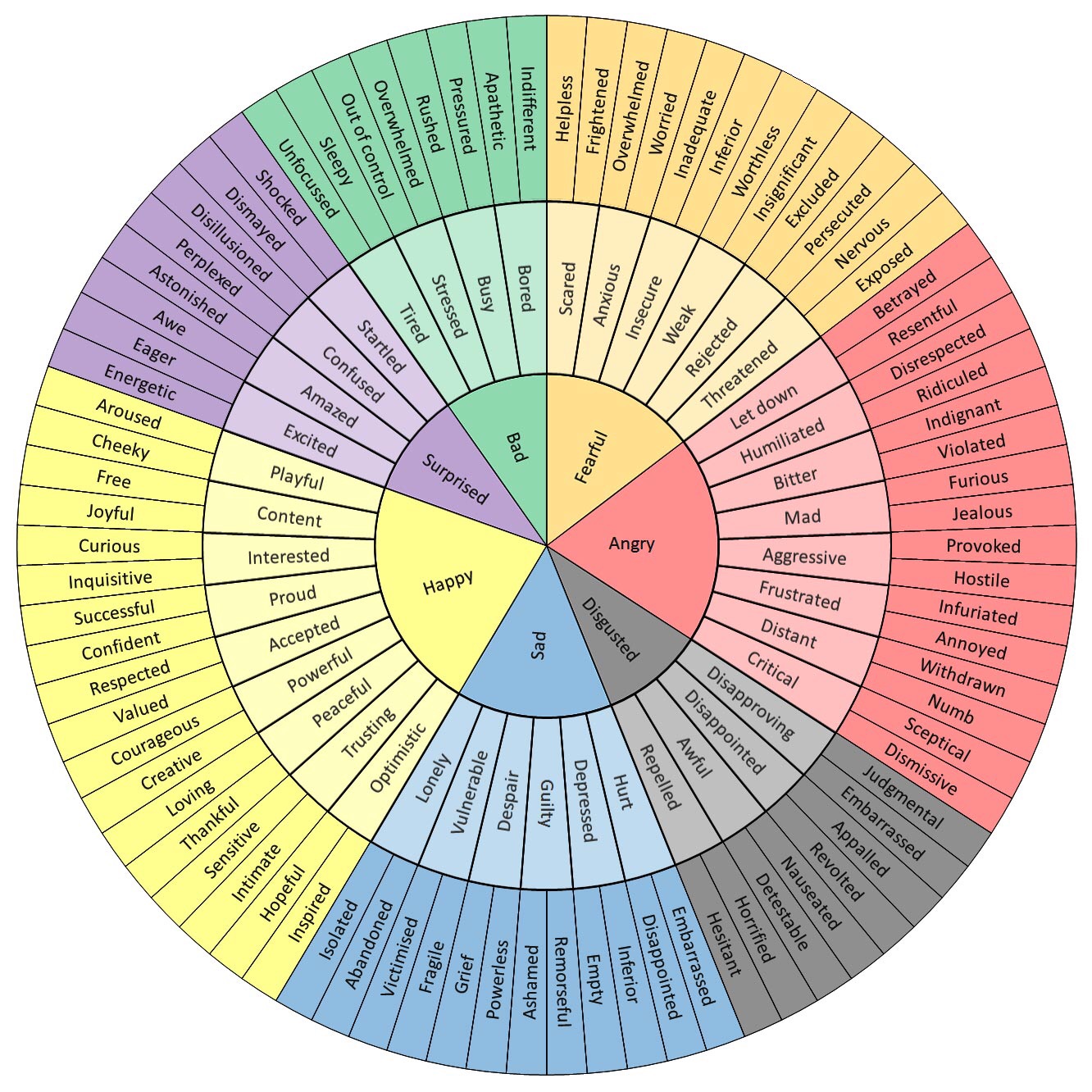
[00:45:04] Speaker A: That's right. That's right. And it is in that understanding. I mean, when I work with people on this, we use a feelings wheel, which a lot of times guys in particular are like, that's hokey.
But the truth is, we don't know what a thing is unless we have a word for it.
And one of the problems that particularly guys have, we've been taught since we were young, on average, since we were little boys, suck it up, walk it off, be a man.
And so anything that we're feeling that's uncomfortable, we bury. We ignore. We push through because, you know, sad and, you know, scared. And those are all feelings girls feel.
The only negative emotion we're allowed to feel as men is anger.
Because it's masculine, it's powerful, feel strong.
Most of the time when I'm talking with guys that have anger issues, they don't. It's not anger.
They feel something that's not even close to anger, but they morph it into anger because that's the only thing they know.
And so once we start understanding, there's Such a wide range of emotions. And I actually think God gave us those emotions for a reason.
I think emotions are incredibly valuable.
Jesus feels them, too, right? All throughout the Gospels, we see him emoting, and I think it's an indication that this is. This is a really healthy expression of a man.
But most guys don't know what they're feeling. They don't have words for it. So we have to figure out what the word is. And then it's like, oh, you know, guys will skip the feeling part. They'll say, you know, they'll just go, thought action, right? I thought that guy was a jerk, so I punched him in the face.
There was actually a feeling in there somewhere, I promise.
But what they probably felt at some level was embarrassment or shame or dismissal or something. Something that's not anger.
But they. They morphed it into an anger action because it's the shortcut that guys take. And so a lot of times, one of the hardest things for people and for couples in particular, is to actually get practiced enough at this point where. So I have my feeling wheel everywhere.
It's on my laptop, it's on my phone, it's on my desk. Like, I have them always accessible because my emotion hits and I go, what is this?
And I have to pull it up. And what happens is when I can identify the emotion, it's easier to connect the thought, right? Once I know I'm embarrassed, what is that?
[00:47:45] Speaker B: What's.
[00:47:45] Speaker A: Oh, I know what it is. I thought that was total failure. When I thought I. Like, I thought everybody was going to make fun of me because of whatever. Now I can get the thought quicker because the emotion's more accurate.
You know, a lot of times people will be like, I was frustrated, so I was angry, so I quit. I was like, no, anger doesn't quit, man.
Anger pushes it, bulldozes. It keeps going.
You quit because you were.
[00:48:11] Speaker B: You.
[00:48:12] Speaker A: You felt like a failure or you were embarrassed. That's why you quit.
And those are reasonable emotions. Like, you need to learn what those are, you know, so.
[00:48:22] Speaker B: And you can almost start at the action and work backwards.
[00:48:25] Speaker A: That's right. That's right.
[00:48:26] Speaker B: I. You know, I've been really focusing lately on fixing my tendency to exaggerate when I'm telling a story. And we were having dinner last night, and I started into a story, and I like to be the guy telling the stories at dinner.
And my wife kind of raised her eyebrows and went, oh, we've talked about what you're about to say.
[00:48:48] Speaker A: And I went, oh, we can all see it coming. Yeah.
[00:48:51] Speaker B: Thankfully my, my spouse helped me there. But then afterwards I was going like, well, what made me about to launch into a big, you know, dad story where the truth is malleable. And I, I think even working back from the, the action while you were about to, like, fib and, you know, what were you feeling? Were you feeling like, I need to be better, I need to look good in front of some guests at a dinner party or whatever? And then what thought drove that?
Okay, now I can get somewhere. So I just think this is really helpful all over the place. I don't know if you'd be willing to share the emotion wheel. If you are, we'll.
[00:49:34] Speaker A: Oh, sure, of course.
[00:49:35] Speaker B: A link to it in the show notes of this episode.
[00:49:38] Speaker A: Absolutely.
[00:49:39] Speaker B: I want to give you a chance to kind of wrap up anything that we maybe didn't hit here and to share with people because like I said, you were very busy in the business world and I think now you're spending a lot more time in ministry and kind of, like you said, doing some interesting things. So I would love for our listeners to just hear what you're up to. If there's organizations you're working with or stuff you're working on that might be beneficial to them, I'd love for folks to just get a quick update on where they could find more of the good stuff that we've been talking about.
[00:50:19] Speaker A: Totally. Yeah. So just one real quick thing to add and then I'll talk about that stuff is when someone comes to you or someone is coming at you that you're in relationship with, they're going to be presenting one of these things.
And so if they're saying, man, I just keep ending up in the same place, that's the result.
What actions are you taking that lead to that result? What feelings are driving those actions? What thoughts are you thinking that lead to that feeling? Or maybe they're coming to you and they say, I just feel so, you know, whatever.
They're giving you one of those lines, fill in the rest of the blanks. When you feel that way, what do you want to do? That's your action. When you do that, what happens? That's the result. Right.
So it just helps the conversations be more about discovery and they're always going to give you one.
I just think that guy was a jerk. What did he do?
That's the circumstance.
Right.
Whatever they're presenting, you can actually fill in the rest of the blanks from there very easily just by asking great questions and moving through it. So don't shut them down.
Take them through the rest of it, wherever they start.
[00:51:29] Speaker B: So it's always questions, whether it's a buddy or a colleague or a four year old. It's.
[00:51:36] Speaker A: That's right, that's right, that's right. Because everybody can answer those questions. They're not hard questions, you know, like, what do you want to do when you feel that way? Everybody can answer that question. Right? So you're not. And you don't need to like, get out, get out a piece of paper and write down ctfar. And you know, but you can still take them through it and it's still a really helpful exercise, even if, even if they don't know exactly what you're doing.
[00:51:56] Speaker B: So is there any chance of a vowel being added between the C and the T? Because, man, it's a hard verb. C2.
[00:52:05] Speaker A: You're right.
[00:52:05] Speaker B: You're right.
[00:52:06] Speaker A: I wish there was a extra layer we could throw in there. Maybe we could come up with one.
All right, that's awesome.
So, but as far as what I'm up to, I left, I started Wealth Quest, was the name of the company that I started, co founded with my dear friend Wade Daniel. And we, I stepped out of that to be a pastor.
We started a second location for our church and that has been a joy. And then in that process through those years, I've also stepped into this role with good sense. I am so passionate about financial discipleship, being taught with biblical wisdom, practical handholds, but also kindness and warmth, treating people with dignity.
There's so much out there that can kind of sound more like, you stupid child. Let me just tell you how to do it the right way. And I just, I don't have a great tolerance for that.
[00:53:01] Speaker B: It's the meme with his hands crossed over his chest.
[00:53:05] Speaker A: That's right. How dare you? Right.
Nobody is getting in trouble financially because they don't know how to do arithmetic. These aren't math problems. They're deep seated spiritual issues. And so good sense is really about healing that we have an app called Freed up that takes families through a whole process of learning what it looks like to be a faithful steward.
And I think my hope is that we're going to start moving towards a place of helping churches prepare pastors to teach about this stuff because it is the number one competitor for our heart. The church needs to talk about money. It very rarely does unless it's raising it, you know, building campaigns and things like that. It should be a common, consistent discipleship discussion around this topic because Jesus talked about it all the time.
The church never talks about it. And so that's, that's really a huge passion project for me and I love what we're up to there, so.
[00:54:01] Speaker B: Awesome. Are you still running the coffee shop?
[00:54:04] Speaker A: Have a coffee shop as well? Yeah, coffee shop attached to the church that we. It's been amazing. It's been so hard. Hardest thing I've ever done. But it's beautiful. God's using it amazing ways. And then, and we donate our profits when we, we have them, which isn't very often to charity, local charities around the area. So, yeah.
[00:54:24] Speaker B: Awesome. Well, if any of that sounds interesting to you, we'll put links to Good Sense and to the app. I think that's something that might be a really cool resource for our folks. I appreciate you, James, and I'll talk to you later.
[00:54:40] Speaker A: Thanks.